Gatineau sits on the Ottawa-Bonnechere Graben, a rift valley where glacial till and Leda clay dominate the subsurface profile. For any structure exceeding two stories, understanding the in-situ density and shear strength of these soft sensitive clays is non-negotiable. Undisturbed sampling (Shelby tube) is the only method that preserves the soil's natural fabric and moisture content, giving us data we can trust for settlement analysis. Before we push a thin-walled tube into the ground, we clear the borehole of disturbed spoils. Then we advance the sampler at a controlled rate to minimize friction and disturbance. The result is a core that represents the ground truth. In Gatineau, where Leda clay can liquefy under dynamic loading, this data is critical. We combine it with laboratory testing like compression simple to obtain undrained shear strength parameters directly.
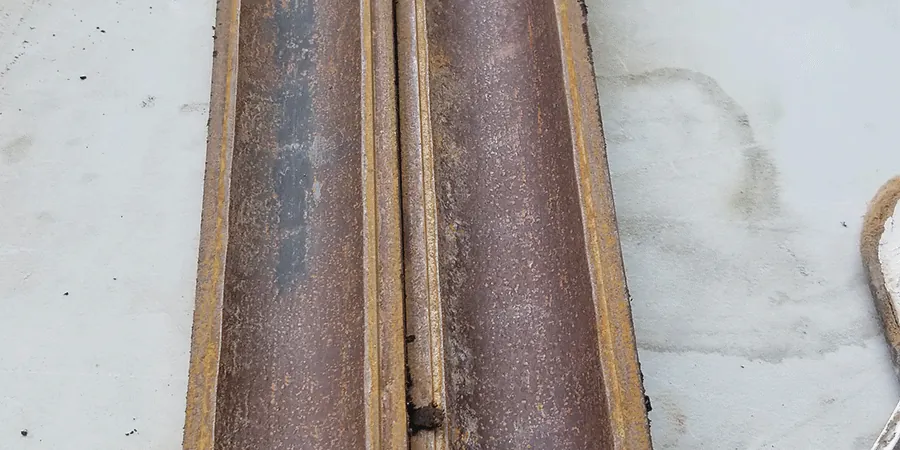
In Leda clay zones, a poorly taken Shelby tube sample can overestimate strength by 30 percent. Sampling technique is everything.
Scope of work in Gatineau
Typical technical challenges in Gatineau
Pushing a Shelby tube into Leda clay without proper clearance risks compressing the sample and destroying the very fabric we need to measure. In Gatineau, where the water table sits less than two meters below grade in many areas, hydrostatic pressure differentials can cause sample heave or cavitation inside the tube. We mitigate this by maintaining a mud column in the borehole and advancing the tube at a rate no faster than 15 mm per second. If the tube plugs or the cutting edge gets damaged, the sample is worthless. Our operators are trained to feel the resistance change through the drill rod and stop immediately if something feels off. A discarded sample costs time but a bad sample costs the entire project.
Our services
We offer two complementary approaches to undisturbed sampling in Gatineau, each tailored to the soil conditions and project requirements.
Standard Shelby Tube Sampling (ASTM D1587)
For cohesive soils including Leda clay, glacial till, and silty clays. Includes borehole preparation, sample extrusion, field logging, and wax sealing. Depth range from 1 to 30 meters. Delivered with chain-of-custody documentation.
Thin-Walled Tube Sampling for Soft Sensitive Clays
Specialized 76 mm diameter tubes with area ratio below 10 percent. Used specifically in Gatineau's Leda clay deposits where sample disturbance must be minimized. Includes moisture content determination and visual classification on site.
Frequently asked questions
What is the difference between undisturbed sampling and SPT sampling?
SPT (Standard Penetration Test) measures blow counts and recovers a disturbed sample, suitable for granular soils. Undisturbed sampling (Shelby tube) recovers a relatively undisturbed core of cohesive soil, preserving its natural structure and moisture content for laboratory tests like triaxial or consolidation. The two methods are complementary in a comprehensive geotechnical investigation.
How deep can you take a Shelby tube sample in Gatineau?
We routinely sample down to 30 meters using NQ or HQ drill rods. The practical limit is determined by rod buckling and the soil's resistance to pushing the tube. For stiff till layers, the maximum depth may be shallower due to refusal. We always pre-drill through cobbles or boulder zones before advancing the tube.
How much does undisturbed sampling cost in Gatineau?
The price for undisturbed sampling (Shelby tube) in Gatineau typically ranges from CA$540 to CA$1,220 per sample. This includes borehole preparation, tube advancement, sample extrusion, field sealing, and basic documentation. The exact cost depends on depth, soil conditions, and number of samples required. Contact us for a project-specific quote.
What laboratory tests can be performed on undisturbed samples?
Undisturbed samples are essential for unconfined compression tests, triaxial tests (U-U, C-U, or C-D), consolidation (oedometer) tests, hydraulic conductivity tests, and resonant column tests. The sample quality directly affects the reliability of these tests. We coordinate with accredited laboratories in Gatineau and Ottawa to run the full suite.
How do you prevent sample disturbance during transport?
We seal each tube with wax caps, cushion the ends with foam, and transport them vertically in a padded rack. The vehicle maintains temperature between 4 and 25 degrees Celsius to prevent moisture migration. Samples are delivered to the lab within 24 hours. We follow ASTM D4220 for preservation and transportation procedures.