Many contractors in Gatineau assume a sandy or gravelly site based on surface appearance, only to find plastic clay at foundation depth. That mistake costs time and money. Atterberg limits determine how a soil behaves when wet — whether it shrinks, swells, or turns into slurry. In Gatineau, where glacial till and Champlain Sea clay dominate, skipping this test leads to slab heave or differential settlement. We run the test per CSA A23.2-2A to classify plasticity before any structural fill or footing design. Combine it with calicatas exploratorias to confirm stratigraphy, or with ensayo SPT for strength correlation across the site.
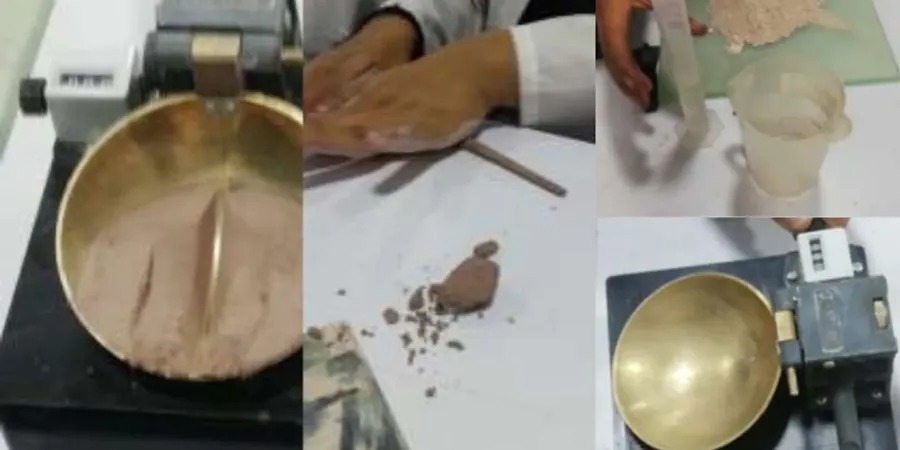
Champlain Sea clay in Gatineau can have a plasticity index above 50 — that soil will not behave like sand. Atterberg limits catch it.
Scope of work in Gatineau
Typical technical challenges in Gatineau
Soils in Plateau versus the Gatineau riverfront behave completely differently. Riverfront areas have soft, high-plasticity Champlain Sea clay that shrinks and cracks in dry summers. Plateau areas tend toward silty till with lower plasticity but higher frost susceptibility. Without Atterberg limits, a foundation designed for one zone gets poured in the other — and cracks appear within two winters. The NBCC requires site-specific soil classification for seismic design in Zone 4, where Gatineau sits. A misclassified soil means the wrong shear modulus goes into the structural model. That is a safety risk, not just a cost issue.
Our services
We offer Atterberg limits testing as part of a full geotechnical lab package. Each test is run by certified technicians under ISO 17025 quality protocols. Results are delivered with a technical interpretation for your specific site in Gatineau.
Multi-Point Liquid Limit (CSA A23.2-2A Method A)
Casagrande cup method with four or more moisture points. We plot the flow curve and report LL to 0.1 % precision. Used for all high-plasticity clay sites in Gatineau.
Plastic Limit & Plasticity Index
Thread-rolling method to determine PL. Combined with LL to calculate PI. Critical for shrink-swell classification and NBCC foundation depth recommendations.
Shrinkage Limit (ASTM D427)
Mercury displacement method to measure volumetric change on drying. Essential for sites near the Gatineau River where desiccation cracks appear in summer.
Frequently asked questions
Why do Atterberg limits matter for homes in Gatineau?
Gatineau has widespread Champlain Sea clay with high plasticity. Atterberg limits tell engineers whether the soil will swell when wet or shrink when dry. That determines the foundation type, slab design, and drainage requirements. Without them, slab-on-grade homes can experience differential movement within two years.
How long does the Atterberg limits test take?
A full set (LL, PL, SL) takes 3 to 5 business days from sample arrival. The drying and multi-point liquid limit procedure requires careful moisture control. Rush service is available for 48-hour turnaround.
What is the difference between liquid limit and plastic limit?
The liquid limit is the moisture content where soil starts to flow like a liquid. The plastic limit is the moisture content where it becomes too dry to roll into threads. The difference between them is the plasticity index — the range where the soil behaves as a plastic material. High PI soils in Gatineau require special foundation detailing.
Does your lab report include USCS classification?
Yes. Atterberg limits are combined with grain-size distribution to assign the Unified Soil Classification System (USCS) group symbol and the AASHTO class. That classification is required by the NBCC for seismic site response analysis and for specifying compaction criteria.