In Gatineau, geotechnical investigation is the critical first step to understand the complex subsurface conditions shaped by the region’s marine clay deposits and glacial till. This category covers regulated field and laboratory procedures aligned with the Code de construction du Québec and CAN/BNQ 2501 standards for foundation design. A common starting point is an [exploratory test pit](exploratory-pit) to visually assess stratigraphy and groundwater, while the [Standard Penetration Test](standard-penetration) provides essential N-values for evaluating soil density and strength in deeper boreholes.
These investigations are mandatory for residential, commercial, and municipal projects ranging from single-family homes on Champlain Sea clays to infrastructure in the Hull sector. The data gathered directly informs foundation type, slope stability analysis, and seismic classification per the National Building Code of Canada. For a complete picture, field programs are paired with laboratory testing to refine bearing capacity and settlement predictions, ensuring safe and compliant construction across the Outaouais region.
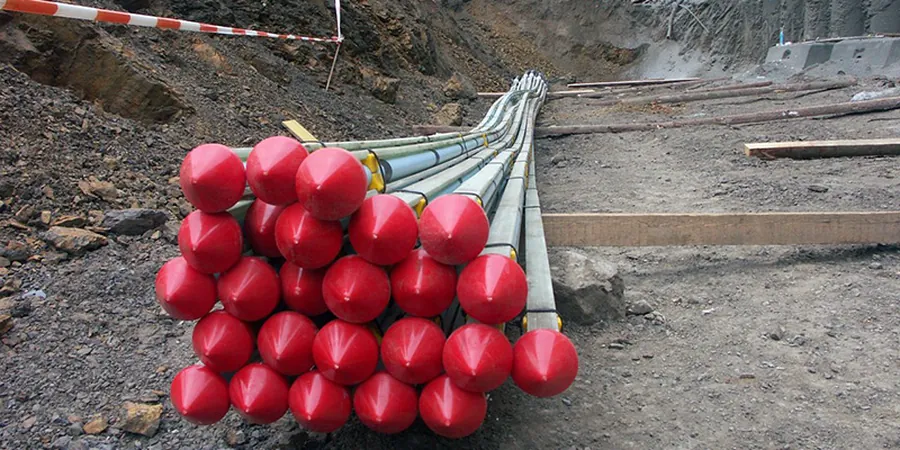
In Gatineau's marine clay, anchor bond zones often need to extend 30% longer than in glacial till to reach equivalent capacity.
Scope of work in Gatineau
Typical technical challenges in Gatineau
The Champlain Sea clay in Gatineau is notorious for creep and loss of strength under sustained load. If an active anchor loses tension over time, the wall or structure it supports can move. We have seen cases where anchors in Hull had to be restressed after two years because the clay relaxed. Another risk is groundwater. The water table sits high in many parts of Gatineau, especially near the river. Hydrostatic pressure can reduce effective stress around the bond zone and lower pullout capacity. We always install standpipes and measure pore pressure before finalizing anchor design. For deep excavations in the Plateau area, we check for boulders in the till that can deflect drilling and reduce bond zone quality.
Our services
We provide a full suite of anchor design services tailored to Gatineau's ground conditions. Each service covers analysis, design, and construction support.
Active Anchor Design
Post-tensioned anchors for retaining walls, bridge abutments, and excavation support. We calculate lock-off loads, bond zone length, and corrosion protection per CSA S6.
Passive Anchor Design
Untensioned anchors for permanent slope stabilization and tieback systems. Design focuses on bond zone development in clay and till, with creep analysis where needed.
Anchor Testing and Verification
Proof load tests, performance tests, and creep tests per ASTM D4435. We monitor load and displacement in real time to confirm design assumptions.
Corrosion Protection Assessment
Evaluation of soil resistivity and chloride content near the Ottawa River. We specify epoxy-coated strands, grout cover, or double corrosion protection systems.
Frequently asked questions
What is the difference between active and passive anchors?
Active anchors are post-tensioned to a specified lock-off load, applying a compressive force to the structure. Passive anchors are not preloaded; they resist movement only after the soil or structure displaces. Active anchors are common in retaining walls where immediate support is needed. Passive anchors work well for permanent slope stabilization where some movement is acceptable.
How does Gatineau's marine clay affect anchor design?
Marine clay has low shear strength and high creep potential. Anchor bond zones must be longer to develop adequate capacity. We also account for creep when setting lock-off loads on active anchors. In our experience, bond zones in clay often need to be 30% longer than in glacial till to reach the same ultimate capacity.
What is the typical cost range for anchor design in Gatineau?
For a standard anchor design package including analysis, drawings, and testing specifications, the cost ranges between CA$1,330 and CA$4,710. This varies with project complexity, number of anchors, and whether corrosion protection is required. We provide a fixed quote after reviewing the geotechnical report and site conditions.
Which building code governs anchor design in Gatineau?
The National Building Code of Canada (NBCC 2020) is the primary code. For concrete anchorage we follow CSA A23.3. For ground anchor specific requirements, we reference CSA S6 (Canadian Highway Bridge Design Code) and FHWA Geotechnical Engineering Circular No. 4.