Gatineau's urban expansion along the Ottawa River and into the Canadian Shield has placed new demands on geotechnical site characterization. The city sits on a mix of sensitive Leda clay, glacial till, and shallow bedrock, each requiring specific dynamic testing. An HVSR microtremor survey in Gatineau captures ambient seismic noise to identify the fundamental resonance frequency of the soil column. This passive method is particularly useful in the downtown core and newer subdivisions where drilling access is limited. Before interpreting HVSR results, engineers often cross-reference with a MASW-Vs30 survey to obtain shear-wave velocity profiles that validate the resonance peaks. The combination reduces uncertainty in seismic site classification for buildings and infrastructure.
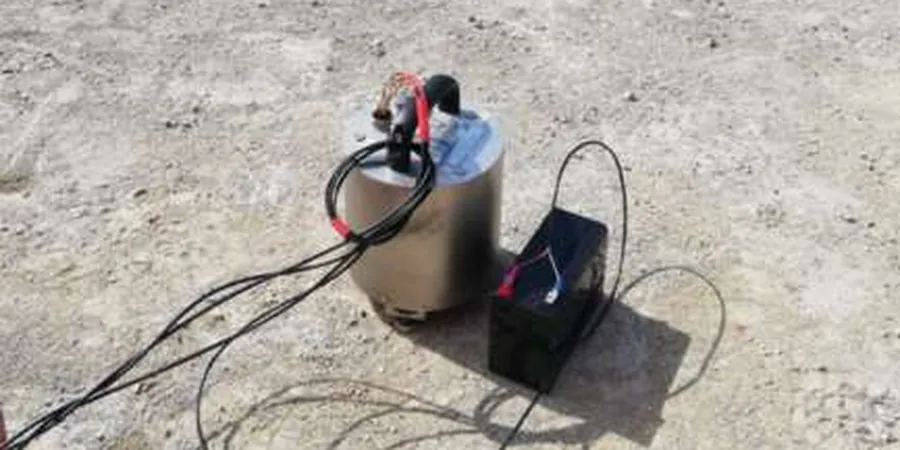
In Gatineau's Leda clay zones, HVSR resonance frequencies below 1 Hz signal deep soft deposits requiring special seismic design per NBCC 2020.
Scope of work in Gatineau
Typical technical challenges in Gatineau
A recent 10-story residential project in the Hull sector of Gatineau encountered unexpected soil amplification during design. The initial geotechnical report relied on a single borehole and did not include an HVSR microtremor survey. During peer review, the structural engineer flagged that the building's natural period (1.1 seconds) closely matched the estimated soil resonance (0.9–1.2 Hz) from nearby HVSR data. This near-resonance condition would have doubled the seismic base shear under NBCC 2020. The project team had to redesign the foundation and add dampers to avoid costly retrofit later. An HVSR microtremor survey in Gatineau from the start would have identified this risk early and saved significant redesign effort.
Our services
We offer two complementary HVSR-based services tailored to Gatineau's varied ground conditions.
Single-Station HVSR Survey
A rapid reconnaissance measurement at one or multiple points to identify fundamental resonance frequency and estimate site class per NBCC 2020. Ideal for preliminary seismic screening of small to medium projects in Gatineau.
Array-Based HVSR with Vs30 Correlation
Multi-station deployment combined with ambient noise array processing to derive shear-wave velocity profiles. This service provides a more solid site class determination and is recommended for critical infrastructure like bridges and schools.
Frequently asked questions
What is the HVSR Nakamura method and how does it work?
The HVSR (Horizontal-to-Vertical Spectral Ratio) method, also known as the Nakamura technique, uses ambient seismic noise recorded by a three-component seismometer. The ratio of the horizontal spectrum to the vertical spectrum reveals the fundamental resonance frequency of the soil column. In Gatineau, this is critical for identifying soft clay layers that amplify seismic waves.
How much does an HVSR microtremor survey in Gatineau cost?
A typical single-station HVSR survey in Gatineau ranges between CA$2,100 and CA$3,620, depending on site access, number of stations, and whether Vs30 correlation is required. Array-based surveys with full processing cost at the higher end of this range.
How does HVSR data influence foundation design in Gatineau?
HVSR provides the soil's natural frequency. If the building's fundamental period matches the soil resonance, dynamic amplification can double the seismic demand. Engineers use HVSR results to adjust foundation stiffness, select damping systems, or change the structural system to detune from resonance.
Can HVSR replace a standard borehole investigation?
No. HVSR is a complementary screening tool, not a replacement. It identifies dynamic properties but does not provide stratigraphic logging, soil strength, or groundwater data. In Gatineau, HVSR is most effective when combined with boreholes and laboratory testing for a complete geotechnical picture.
What site classes are common in Gatineau based on HVSR results?
Based on regional HVSR data, site classes range from C (very dense soil or soft rock) on the Canadian Shield outcrops to D (stiff soil) in the downtown area and E (soft soil) in the Leda clay plains of the Hull sector. Each class requires different seismic design provisions under NBCC 2020.