Gatineau grew rapidly through the 20th century as a satellite of Ottawa, with much of its expansion occurring on the fine-grained marine clays of the Champlain Sea basin. These sensitive clays, known locally as Leda clay, pose a unique challenge for road and pavement construction because their bearing capacity changes dramatically with moisture content. That is why a laboratory CBR test in Gatineau is not just a routine specification — it is a critical input for designing subgrade layers that will hold up under freeze-thaw cycles and seasonal water table fluctuations. In our experience, projects along boulevard Gréber or near the Gatineau River often require careful CBR evaluation to avoid premature pavement failure, especially when the subgrade sits on the soft Champlain clay that defines much of the city's subsurface.
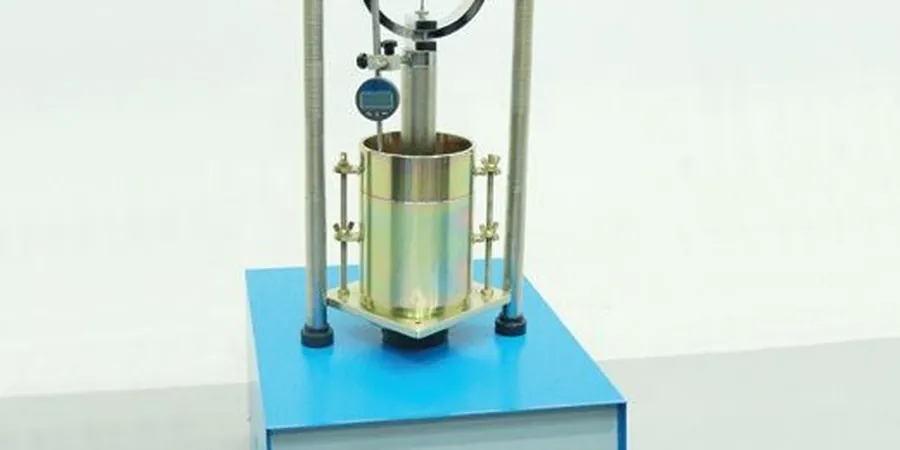
Soaked CBR values under 5 percent on Champlain Sea clays demand a thicker granular base or subgrade improvement to prevent rutting after spring thaw.
Scope of work in Gatineau
Typical technical challenges in Gatineau
The National Building Code of Canada (NBCC 2020) references subgrade bearing capacity indirectly through geotechnical investigation requirements, but the real risk in Gatineau comes from the post-glacial clays that lose strength when saturated. A laboratory CBR test in Gatineau that shows soaked values below 3 percent signals a high risk of subgrade pumping and differential settlement under traffic loads. Without this data, pavement sections designed for CBR 8 may fail within two to three winters, especially in areas like the Plateau or Hull sectors where the water table sits less than 1.5 metres deep. The cost of a full-depth reclamation later far exceeds the upfront testing investment.
Our services
We offer a complete suite of laboratory and field services to support pavement and earthworks projects in Gatineau, all coordinated from our accredited soils lab.
Standard CBR (ASTM D1883)
Soaked or unsoaked CBR testing on remoulded samples at Proctor optimum density, with full moisture-density curve and penetration report.
Modified CBR for Heavy Traffic
CBR on samples compacted at modified Proctor energy, simulating high-compaction subgrades under arterial roads and industrial pavements.
Field CBR Correlation
Correlation of lab CBR values with in-situ DCP (dynamic cone penetrometer) readings for rapid quality control on active construction sites.
Frequently asked questions
How much does a laboratory CBR test cost in Gatineau?
The typical cost ranges from CA$190 to CA$300 per sample, including compaction, four-day soaking, and penetration testing. Bulk discounts apply for projects requiring 10 or more samples from different sections of the same pavement alignment.
What is the difference between soaked and unsoaked CBR?
A soaked CBR test submerges the compacted sample for 96 hours to simulate spring thaw or prolonged rainfall conditions. Unsoaked CBR represents dry or well-drained conditions. For Gatineau's clay subgrades, the soaked value is always the governing design parameter because the water table rises close to the surface after snowmelt.
Can I use the same CBR value for both flexible and rigid pavement design?
Not directly. Flexible pavement design (AASHTO 1993 or Mechanistic-Empirical) uses CBR to derive the subgrade resilient modulus (Mr = 1500 × CBR for fine-grained soils). Rigid pavement design relies more on the modulus of subgrade reaction (k-value), which can be correlated from CBR but is better measured by a plate load test. We can provide both correlations from the same sample.
How long does the full CBR test take from sample delivery to report?
The minimum turnaround is five business days, because the four-day soaking period is mandatory per ASTM D1883. If you need preliminary results faster, we can run an unsoaked CBR in two days, but the soaked value remains the final design parameter for Gatineau clay sites.